
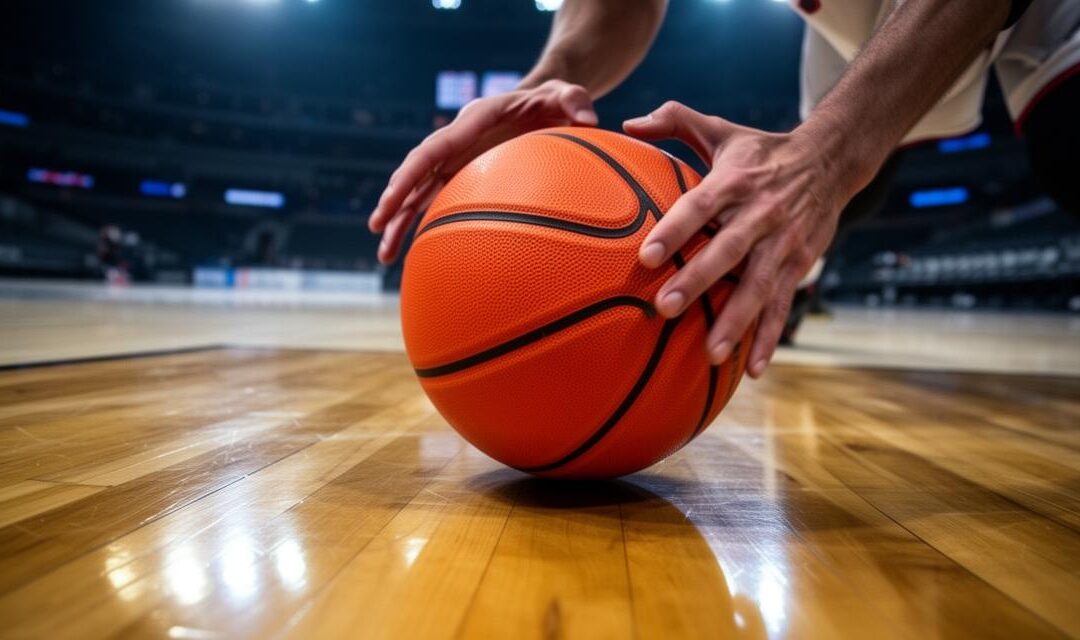
Basketball mastery extends far beyond shooting and passing. The ability to control the ball with precision and confidence transforms every aspect of your performance on the court. Whether you're manoeuvring through a crowded paint or executing a fast break, dribbling serves as the foundation upon which all great players build their skill set. Through dedicated practice and strategic training, you can unlock new dimensions of your game that elevate not only your individual capabilities but also your contribution to team success.
Mastering fundamental ball control: building your foundation
Establishing a solid foundation in ball handling begins with understanding the core principles of effective dribbling. The journey to becoming a proficient dribbler requires commitment to daily practice routines that challenge your touch, coordination, and spatial awareness. Each session should focus on reinforcing the connection between your hand and the ball, allowing you to execute movements without conscious thought during competitive play.
Essential daily dribbling routines for muscle memory development
Consistency forms the backbone of skill acquisition in basketball. Dedicating several minutes each day to focused dribbling exercises creates the neural pathways necessary for automatic ball handling. Start with stationary drills that emphasise control before progressing to movement-based routines. The repetition of basic patterns such as alternating crossovers, behind-the-back switches, and between-the-legs transitions gradually embeds these techniques into your muscle memory. Over time, your hands begin to respond instinctively to game situations without requiring deliberate concentration on mechanics.
Incorporating varied tempo and rhythm into your daily sessions prevents monotony whilst challenging different aspects of your coordination. Begin with slow, deliberate movements that allow you to focus on proper hand positioning and ball contact. As comfort increases, gradually accelerate your pace whilst maintaining control. This progression ensures that your foundation remains solid even when match intensity demands rapid execution. The key lies in patience and persistent effort rather than rushing through exercises without attention to detail.
Progressive exercises tailored to every skill level
Effective training programmes recognise that players enter at different stages of development. Beginners benefit from simplified drills that emphasise single-hand control and basic crossover patterns. These foundational exercises build confidence and establish proper form before introducing complexity. Intermediate players can incorporate multi-directional movements and combination sequences that simulate game scenarios. Advanced athletes should challenge themselves with high-intensity drills that incorporate defensive pressure simulation and decision-making components.
Creating a structured progression ensures continuous improvement regardless of starting point. Early exercises might include stationary dribbling with each hand, focusing on maintaining consistent ball height and rhythm. As proficiency grows, introduce lateral movement whilst maintaining control, then add changes of direction and speed variations. This layered approach prevents frustration for newcomers whilst providing clear pathways for advancement. Each level builds upon previous achievements, creating a comprehensive skill set that translates directly to competitive performance.
Advancing your court awareness through dynamic dribble training
Ball handling excellence extends beyond mechanical proficiency to encompass tactical awareness and decision-making ability. The most effective dribblers possess an innate sense of spatial relationships, defender positioning, and teammate movement patterns. Developing this court vision requires training methods that simulate the complex, dynamic environment of actual matches rather than isolated technical drills.
Reading defensive patterns and making split-second decisions
Elite ball handlers distinguish themselves through their ability to process visual information whilst maintaining control. During practice sessions, incorporate elements that require you to respond to external stimuli rather than executing predetermined sequences. Partner drills where a teammate applies varying levels of defensive pressure force you to adapt your dribbling approach based on spacing and positioning. This reactive training develops the cognitive processing speed necessary for competitive success.
Understanding defensive tendencies transforms dribbling from a mechanical action into a strategic weapon. Recognise when defenders overcommit to one side, creating opportunities for explosive change-of-direction moves. Learn to identify gaps in defensive positioning that allow penetration toward the basket. These split-second assessments become instinctive through repeated exposure to game-like situations during training. The integration of decision-making components elevates simple ball handling exercises into comprehensive development tools that prepare you for the unpredictability of actual competition.
Enhancing Coordination and Movement with Varied Dribble Techniques
Diversifying your dribbling repertoire enhances overall athleticism and court effectiveness. Different techniques engage distinct muscle groups and movement patterns, creating a more versatile and unpredictable offensive threat. Practising various styles of dribbling improves footwork coordination, balance, and body control beyond what repetitive single-technique training achieves. The crossover develops lateral quickness and deception, whilst behind-the-back moves enhance rotational flexibility and spatial awareness.
Combining multiple dribble techniques within single sequences amplifies their effectiveness. Transitioning smoothly from a low power dribble to an explosive crossover then into a between-the-legs manoeuvre creates rhythmic unpredictability that challenges defenders. This variety forces opponents to remain honest defensively rather than anticipating your next move. Regular practice of combination sequences develops the fluidity that characterises elite ball handlers, transforming mechanical movements into natural expressions of athletic creativity.
Elevating ball manipulation through ambidextrous training methods
True ball handling mastery requires equal proficiency with both hands. Many players possess a dominant hand that becomes a crutch during pressure situations, limiting their offensive options and creating predictable patterns that savvy defenders exploit. Committing to ambidextrous development eliminates this vulnerability and transforms you into a genuinely two-way threat capable of attacking from any position.
Developing equal proficiency with both hands
Achieving bilateral competence demands intentional focus on your weaker hand during training sessions. Begin by dedicating equal practice time to each hand, even when the imbalance feels uncomfortable. Perform all fundamental drills with your non-dominant hand until the movements feel as natural as those executed with your stronger side. This deliberate practice gradually eliminates the preference gap, creating genuine versatility in your offensive capabilities.
Resist the temptation to favour your dominant hand during challenging exercises. Whilst initial progress with your weaker side may feel slow, persistence yields exponential improvements over time. As both hands develop comparable strength and coordination, your offensive options multiply dramatically. Defenders can no longer force you toward a predictable direction, and you gain the flexibility to attack from any angle based on tactical advantage rather than physical limitation. This transformation represents one of the most significant upgrades available to dedicated players willing to invest in comprehensive development.
Utilising video analysis to refine your technical execution
Modern technology provides unprecedented opportunities for skill refinement through visual learning tools. Recording your practice sessions creates valuable feedback that reveals technical flaws invisible during live execution. Comparing your form against professional models through video tutorials highlights specific areas requiring adjustment. This visual analysis accelerates improvement by making abstract coaching concepts concrete and observable.
Studying your recorded sessions with a critical eye identifies inefficiencies in hand positioning, body posture, and movement patterns. Notice whether your dribble height remains consistent or fluctuates unpredictably. Observe your head position to ensure proper court vision maintenance whilst handling the ball. These observations translate into targeted corrections during subsequent practice sessions. Regularly reviewing footage creates a feedback loop that continuously refines your technique toward optimal efficiency. The combination of physical repetition and analytical review produces faster, more comprehensive development than either approach achieves independently.